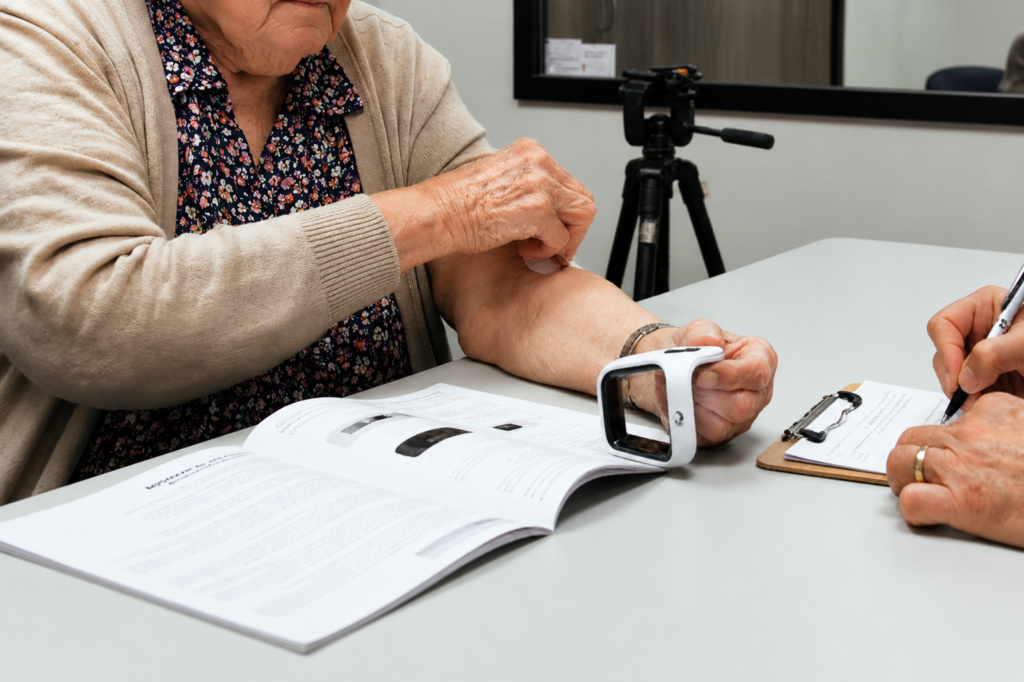
Medical device usability testing
Medical device usability testing evaluates whether a medical device can be used safely, effectively, and intuitively by its intended users in representative use environments. Through expert reviews, formative usability testing, and human factors validation testing, usability issues and potential use errors can be identified, evaluated, and addressed throughout the medical device development process.
Human Factors Insight provides end-to-end medical device usability testing consultancy services for manufacturers preparing for FDA, EU MDR, MHRA, and NMPA regulatory submissions. As a result, we support every stage of the usability study process, from study planning and participant recruitment to study execution, data analysis, and final reporting, in alignment with FDA’s human factors guidance and IEC 62366-1.
Medical device expert review
A medical device expert review is a structured human factors evaluation of a medical device user interface, performed independently by our human factors engineers. The expert review (also referred to as a human factors expert review or heuristic evaluation) is used to identify potential use-related risks, usability issues, and opportunities for design improvement.
Medical device expert reviews can evaluate the complete device or specific elements of the user interface, workflow, instructions for use (IFU), reference guides, labeling, and other user-facing materials.
Cost-effective alternative to early-stage formative usability testing
Evaluates the medical device user interface, labeling, and instructions for use (IFU)
Based on established human factors principles, industry-standard heuristics, and medical device design guidelines
Provides a detailed report with actionable design recommendations
Medical Device Formative Usability Testing
Conduct formative usability testing with representative users throughout the medical device design and development process. This helps identify use errors, usability issues, and opportunities for design improvement.
Formative usability testing is an important part of the human factors and usability engineering process. In particular, it helps manufacturers refine the user interface and address potential use-related risks before final design validation.
In addition, findings from formative usability studies can support the evaluation of risk controls and inform updates to the use-related risk analysis (URRA). As a result, manufacturers can implement evidence-based design improvements and better prepare their device for human factors validation testing.
Evaluate medical device usability with representative intended users
Identify use errors and usability issues early in the design process
Optimize the user interface and labelling to support safe, effective, and intuitive use
Reduce the likelihood of critical use errors during human factors validation testing
Human Factors Validation Testing
Human factors validation testing, also known as summative usability testing, evaluates whether representative intended users can use a production-equivalent medical device safely and effectively under expected use conditions. Specifically, a human factors validation test focuses on critical tasks and provides objective usability evidence to support regulatory submissions.
We plan and conduct medical device human factors validation studies in alignment with FDA human factors guidance and IEC 62366, from study protocol development and participant recruitment through study execution, use error analysis, and final reporting. Validation studies can support regulatory submissions in the United States, Europe, and other global markets.
Evaluate a production-equivalent medical device and labeling with representative intended users
Evaluate critical tasks, use errors, close calls, and use difficulties
Conduct testing in alignment with FDA’s human factors guidance and IEC 62366
Receive a comprehensive, submission-ready human factors validation report
Our Medical Device Usability Testing Process
01
Planning
Define usability test objectives, user groups, critical tasks, use scenarios, and test methodology.
02
Participant recruitment
Recruit representative intended users, including healthcare professionals, patients, and caregivers, according to study-specific recruitment criteria.
03
Study execution
Conduct the usability study in a representative use environment and capture use errors, close calls, use difficulties, and participant feedback.
04
Data analysis & reporting
Analyze study findings and root causes and document the results in a comprehensive usability study report.
Frequently asked questions
Medical device usability testing evaluates how intended users interact with a medical device to identify use errors, usability issues, and opportunities for design improvement. Usability testing is conducted with representative users under representative use conditions.
Formative usability testing is conducted during device development to identify usability issues and improve the design. Human factors validation testing, also known as summative usability testing, evaluates the final user interface to demonstrate that the device can be used safely and effectively.
Formative usability testing should be conducted throughout the design and development process. Testing early allows usability issues and potential use errors to be identified and addressed before the device design is finalized.
For FDA submissions, human factors validation studies typically include at least 15 participants from each distinct user group. The appropriate sample size ultimately depends on the device, intended users, use-related risks, study objectives, and applicable regulatory requirements.
A usability study can include study planning, protocol development, participant recruitment, study execution, data analysis, root cause analysis, and reporting. The exact activities depend on whether the study is formative or intended for human factors validation.
Planning a medical device usability study?
We can help you plan, manage, and conduct your formative usability test or human factors validation test.
Schedule a free consultation