
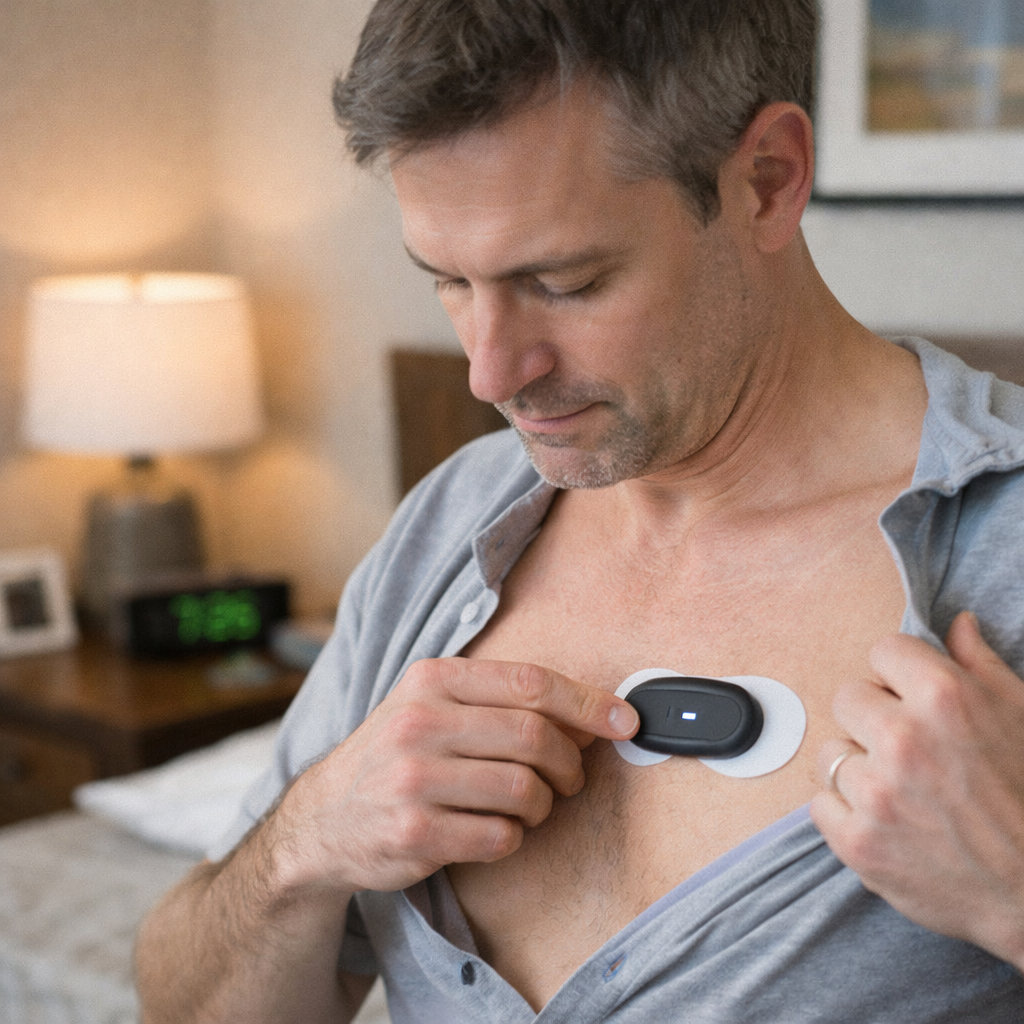
Case study: Optimizing the design of a wearable medical device
The challenge
A medical device startup developed a next-generation medical wearable device intended for adult patients and caregivers. However, early pilot testing revealed high rates of use errors during device set-up and pairing, potentially leading to incorrect health data transmission.
Our approach
Over the course of six months, Human Factors Insight conducted two iterative rounds of formative usability testing with representative patient and caregiver participants.
All usability studies were conducted in a simulated test environment. During each usability test session, each participant performed representative use scenarios to evaluate the wearable medical device’s usability.
Conducted two rounds of formative usability testing
Supported the redesign of the set-up and pairing workflow
Supported the redesign of the companion mobile application
Succesfully conducted a 30-participant human factors (HF) validation test
Developed an FDA-compliant Human Factors Engineering (HFE) Report for FDA submission
Results
The final human factors (HF) validation study showed a 85% reduction of use errors associated to critical tasks among the target participant user groups. The Human Factors Engineering (HFE) report was submitted to the FDA as part of the 510(k) package, resulting in clearance in under 6 months with zero additional HFE questions from regulatory reviewers.
Key metrics
85%
Reduction of use errors
<6 months
Regulatory approval
0
Comments on HFE technical file
Need similar results?
Contact us to discuss how we can help you achieve similar results.
Contact usHow can we help?
Schedule a free consultation or request a quote for your human factors and usability engineering needs.
Contact Us
sheldon@hf-insight.com
Call Us
+31 6 25 33 96 77
Where we operate
Globally